Why Vector of 3d Render Food Shape Assets Are Essential for Modern Digital Design
In the fast-paced world of digital marketing and graphic design, visual appeal is not just an advantage; it is a necessity. Whether you are crafting a social media campaign for a new cafe, designing packaging for a beverage brand, or building a user interface for a food delivery app, the quality of your imagery dictates the success of your project. This is where the Vector of 3d Render Food Shape Assets becomes an invaluable resource. These assets bridge the gap between photorealistic appeal and the flexibility required by professional designers, offering a solution that saves time while elevating aesthetic standards.
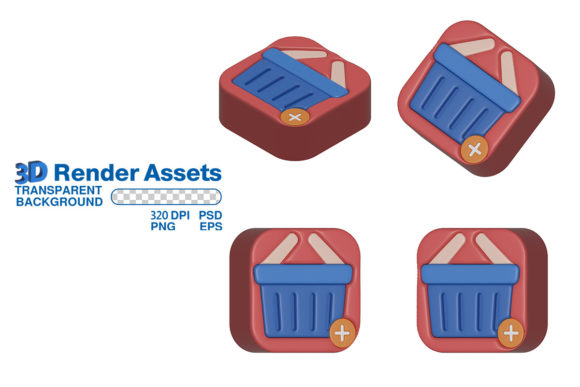
Understanding what these assets actually offer is the first step to leveraging them effectively. At their core, these are high-fidelity three-dimensional renders of various food and drink items. However, unlike standard stock photography, which locks you into a specific lighting setup, angle, and background, these assets provide a level of modularity that is rare in traditional media. The inclusion of formats like PNG at 5000x5000 pixels ensures that you have crisp, transparent backgrounds ready for immediate use, while the EPS and PSD files allow for deep customization. With a resolution of 300 DPI, these files are print-ready, making them suitable for everything from digital ads to large-format physical banners.
Transforming Menu Design and Restaurant Branding
One of the most immediate applications for these 3D render assets is in the hospitality industry. Restaurant owners and menu designers often struggle with the inconsistency of food photography. Lighting changes, ingredients wilt, and colors shift depending on the time of day the photo was taken. By utilizing Vector of 3d Render Food Shape Assets, designers can create menu layouts that are visually consistent and appetizing regardless of external factors.
Imagine designing a seasonal menu for a coffee shop. Instead of scheduling an expensive photoshoot for every new latte art variation or pastry addition, you can integrate high-quality 3D renders of coffee cups, beans, and baked goods. Because these assets come in PSD format, you can easily adjust the color tones to match your brand’s specific palette. If your brand uses a warmer, cozier aesthetic, you can tweak the shadows and highlights in Photoshop to reflect that mood. This level of control ensures that the visual identity of the restaurant remains cohesive across all touchpoints, from the physical menu to the online ordering platform.
Elevating E-Commerce and Product Packaging
For businesses involved in the sale of food and beverage products, packaging design is a critical component of shelf appeal. In a retail environment, customers make split-second decisions based on visual cues. High-resolution 3D assets allow packaging designers to prototype and visualize how their designs will look in real-world scenarios without the need for physical mockups at every stage.
The EPS files included in this asset pack are particularly useful here. As vector-based or high-resolution scalable formats, they allow designers to resize elements without losing quality. This is crucial when adapting a design from a small label on a bottle to a large display stand. Furthermore, the transparency of the PNG files means that these food shapes can be layered over complex backgrounds, textures, or patterns without awkward white boxes or jagged edges. This seamless integration helps create dynamic packaging designs that stand out in a crowded market.
Streamlining Social Media Content Creation
Social media managers and content creators face the constant pressure to produce fresh, engaging visuals daily. Sourcing unique food imagery that doesn’t look like generic stock photos can be challenging and time-consuming. The Vector of 3d Render Food Shape Assets offer a library of ready-to-use elements that can be quickly assembled into compelling posts.
Consider a health food brand promoting a new smoothie line. Using these assets, a designer can create a vibrant collage featuring 3D rendered fruits, vegetables, and drink containers. Because the assets are pre-rendered with realistic lighting and textures, the final composition looks professional and polished. The 5000x5000 pixel resolution ensures that these images look sharp on high-density displays, such as Retina screens, which are common among the target demographic of adults aged 20–50. This attention to detail enhances perceived brand value and encourages higher engagement rates.
Enhancing UI/UX for Food Delivery Applications
The user experience in food delivery apps relies heavily on clear, attractive imagery to stimulate appetite and drive orders. However, loading heavy photographic images can slow down app performance. 3D rendered assets, particularly when optimized, offer a balance between visual fidelity and performance. Designers can use these assets to create uniform icon sets, category headers, and promotional banners.
The consistency provided by a unified set of 3D renders helps in creating a intuitive navigation structure. When all food items share a similar lighting direction and stylistic approach, the interface feels cleaner and more organized. This reduces cognitive load for the user, making it easier to browse options and make selections. Additionally, the ability to manipulate these assets in PSD allows UX designers to create different states for interactive elements, such as hover effects or selected states, adding a layer of interactivity that static photos cannot provide.
Practical Considerations for Choosing and Using These Assets
While the benefits are clear, there are practical considerations to keep in mind when integrating these assets into your workflow. First, consider the file formats. The PNG files are ideal for quick drag-and-drop usage in web design or social media graphics where transparency is needed. However, for print materials or extensive editing, the PSD and EPS files are superior. The PSD files allow for layer manipulation, meaning you can separate elements, adjust colors, or add effects non-destructively. The EPS format is essential for vector-based workflows, ensuring scalability for large-format printing.
Another consideration is lighting consistency. While 3D renders are highly controlled, you must ensure that the lighting direction in the asset matches the rest of your design composition. If you are compositing multiple food items together, pay attention to shadow placement and highlight intensity. Mismatched lighting can break the illusion of realism and make the design look amateurish. Taking the time to adjust these elements in Photoshop will significantly enhance the final output.
It is also important to recognize the limitations. While 3D renders are versatile, they may lack the organic imperfections that sometimes make food photography feel authentic. For brands that pride themselves on rustic, homemade aesthetics, overly perfect 3D renders might feel too sterile. In such cases, applying texture overlays or slight distortions in post-production can help achieve a more natural look.
Maximizing Value Through Customization
The true power of the Vector of 3d Render Food Shape Assets lies in customization. Do not settle for using the assets exactly as they are downloaded. Use the PSD files to experiment with color grading, add custom shadows, or combine different elements to create unique compositions. For instance, you might take a rendered coffee cup and place it next to a rendered croissant, adjusting the perspective so they interact naturally. This creative freedom allows you to produce unique visuals that competitors using standard stock photos cannot replicate.
Furthermore, the high resolution of 300 DPI means these assets are future-proof. As display technologies improve and print standards evolve, having high-quality source files ensures that your designs remain relevant and sharp. This longevity makes the initial investment in such asset packs highly cost-effective compared to commissioning custom photoshoots for every project.
If you are looking to streamline your design process while maintaining high visual standards, these assets provide a robust solution. They cater to a wide range of industries and use cases, offering flexibility and quality that traditional photography often cannot match. Download yours now to start exploring the possibilities, and chat me if you had a question about specific use cases or technical requirements.