3D Isometric Web Banner Template: Integrating High-Fidelity Visuals into Urban Design and Property Marketing Workflows
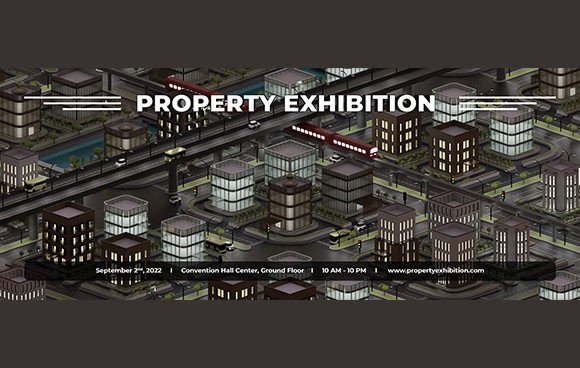
In the competitive landscape of digital marketing for architecture, real estate, and urban planning, visual clarity is not merely an aesthetic choice; it is a functional necessity. The 3D Isometric Web Banner Template serves as a critical asset for professionals who need to communicate complex spatial concepts quickly and effectively. Whether you are promoting a property exhibition, hosting an urban design webinar, or launching a new mixed-use development, the ability to present a cohesive, high-resolution visual narrative can significantly impact engagement rates and conversion metrics.
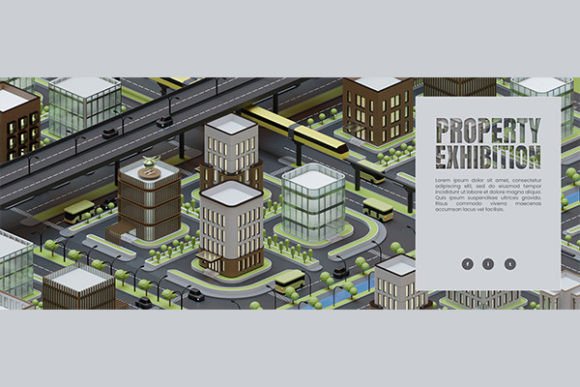
This article explores how to integrate a Web Banner Template With 3D Isometric City Illustration into your existing creative and marketing workflows. We will examine the technical specifications, such as the 2400 x 6000 pixel dimensions and 150 DPI resolution, and discuss how editable text and well-organized layers facilitate efficient production cycles for marketers, designers, and entrepreneurs.
Understanding the Strategic Value of Isometric Illustrations
Isometric projection offers a unique advantage in architectural visualization. Unlike perspective drawings that vanish into the distance, isometric views maintain parallel lines, allowing viewers to see multiple sides of a structure simultaneously. This creates a sense of depth and scale without the distortion often found in wide-angle photography. For urban planning webinars or property exhibitions, this clarity is essential. It allows stakeholders to understand the relationship between different elements—such as offices, hotels, and apartments—within a broader city context.
When you utilize a 3D illustration including office, hotel, and apartment structures, you are not just displaying buildings; you are showcasing an ecosystem. This holistic view helps potential investors or attendees grasp the viability and lifestyle appeal of a project. The 3D Isometric Web Banner Template provides a pre-rendered foundation that saves hours of modeling time, allowing teams to focus on messaging and strategic placement rather than starting from scratch.
Technical Specifications and Workflow Compatibility
The efficiency of any design asset depends heavily on its technical robustness. This specific template is delivered as a PSD file with dimensions of 2400 x 6000 pixels at 150 DPI. These specifications are chosen to balance high visual quality with manageable file sizes for web deployment. The 150 DPI resolution is sufficient for digital displays, ensuring crisp edges on retina screens while keeping load times optimized for landing pages and email campaigns.
The well-organized layers are perhaps the most significant feature for professional workflows. In a typical agency or freelance environment, time spent searching for specific elements is non-billable waste. A properly structured PSD allows designers to isolate specific components—such as the sky, foreground elements, or individual buildings—without affecting the rest of the composition. This modularity supports rapid iteration. If a client requests a change in the color scheme of the hotel facade or needs to swap out the text for a different event date, these adjustments can be made in minutes rather than hours.
Editable Text and Customization Efficiency
Marketing campaigns often require last-minute updates. A template with editable text empowers marketers and small business owners to make changes without needing advanced Photoshop skills. This democratization of design resources means that project managers can adjust headlines, call-to-action buttons, or event details directly, reducing the bottleneck of waiting for design team availability. This flexibility is crucial for time-sensitive promotions, such as early-bird registration for an urban planning webinar.
Integrating the Template into Your Marketing Lifecycle
To maximize the return on investment for this asset, it is important to understand where it fits within the broader project lifecycle. The Web Banner Template With 3D Isometric City Illustration is versatile enough to be used across various stages of a campaign.
Pre-Launch and Awareness Phase
During the initial awareness phase, the goal is to generate interest and establish brand authority. The detailed 3D render serves as a hook. You can use the banner on social media platforms, LinkedIn ads, and industry forums to tease upcoming events. The intricate details of the isometric city invite closer inspection, increasing dwell time on posts. Here, the focus should be on the visual appeal and the promise of value—such as "Discover the Future of Urban Living" or "Join the Architecture Innovation Summit."
Active Promotion and Conversion Phase
As the campaign moves into the active promotion stage, the banner’s role shifts to driving conversions. The editable text fields become critical here. You can create multiple variations of the same banner to A/B test different messages. For instance, one version might highlight the "Luxury Apartment Features," while another focuses on "Commercial Office Space Availability." By keeping the visual consistency of the 3D isometric city but changing the copy, you maintain brand recognition while targeting specific audience segments. This approach ensures consistency across channels, reinforcing the professional image of your property exhibition or webinar.
Post-Event and Follow-Up
Even after an event has concluded, the asset retains value. You can repurpose the banner for thank-you emails, recap blog posts, or case studies. By simply updating the text to "Thank You for Attending" or "Watch the Recording Now," you extend the lifespan of the design. This sustainable approach to content creation reduces the need for constant new designs, allowing resources to be allocated to other strategic initiatives.
Practical Implementation Tips for Designers and Marketers
Successfully deploying the 3D Isometric Web Banner Template requires attention to detail and an understanding of digital best practices. Here are several practical considerations to ensure smooth integration:
- Maintain Visual Hierarchy: While the 3D illustration is detailed, ensure that your text remains legible. Use contrasting colors for headlines and calls to action. The isometric background should support, not compete with, the message.
- Optimize for Web Performance: Although the source file is 2400 x 6000 pixels, always export final assets in web-friendly formats like JPEG or PNG. Consider using compression tools to reduce file size without sacrificing visible quality, ensuring faster page load speeds.
- Consistency Across Platforms: If you are using the banner for both desktop and mobile campaigns, create cropped versions. The vertical nature of the 2400 x 6000 canvas is ideal for scrolling feeds, but you may need square or horizontal variants for other placements. Keep the core isometric elements consistent to maintain brand identity.
- Layer Management: Before making edits, duplicate the original PSD file. Work on copies to preserve the master template. Group related layers (e.g., "Text Elements," "Background," "Foreground Objects") to keep the workspace organized, especially if collaborating with other designers.
Enhancing Collaboration and Quality Control
For teams working remotely or across different departments, the Web Banner Template With 3D Isometric City Illustration acts as a single source of truth. By standardizing the visual asset, you reduce the risk of brand inconsistency. Marketing teams can rely on the template to produce on-brand materials without extensive back-and-forth with the design department. This streamlined process enhances productivity and allows for quicker response to market trends.
Quality control is simplified when using a high-quality template. Since the 3D renders are professionally created, you avoid common pitfalls such as poor lighting, unrealistic shadows, or low-resolution textures. This ensures that every output meets a high standard of professionalism, which is particularly important in industries like architecture and real estate where perception of quality directly influences trust.
Long-Term Usability and Scalability
Investing in a versatile template like this offers long-term benefits. The 3D illustration including office, hotel, and apartment elements is generic enough to be reused for various projects. Whether you are promoting a residential complex, a commercial district, or an educational seminar on urban design, the underlying visual language remains relevant. This scalability means that the initial cost of the template is amortized over multiple campaigns, providing excellent value for freelancers and small businesses.
Furthermore, the PSD format ensures compatibility with industry-standard software. As design tools evolve, PSD files remain widely supported, protecting your investment in digital assets. You can also import elements into other applications, such as After Effects for motion graphics or Illustrator for vector-based adjustments, expanding the utility of the original file.
Conclusion
The 3D Isometric Web Banner Template is more than just a graphic resource; it is a strategic tool for enhancing communication in architecture and urban planning sectors. By leveraging its high-resolution 3D renders, editable text features, and organized layer structure, professionals can streamline their creative workflows, maintain brand consistency, and deliver impactful visual messages. Whether you are organizing a property exhibition or launching an urban design webinar, integrating this template into your process allows you to focus on strategy and engagement, knowing that your visual foundation is solid, professional, and adaptable.