Evaluating Creative and Customizable Pricing Plan UI Elements for Web Design
In the competitive landscape of digital product sales and service subscriptions, the presentation of pricing information is a critical conversion factor. A well-designed pricing table does more than list costs; it guides user decision-making, establishes value perception, and reinforces brand identity. This article evaluates 4. Pricing Plan UI Elements, a design resource characterized by its creative, colorful, and highly customizable interface components. By examining its features, usability, and technical specifications, designers and developers can determine whether this asset aligns with their project requirements.
Understanding the Resource
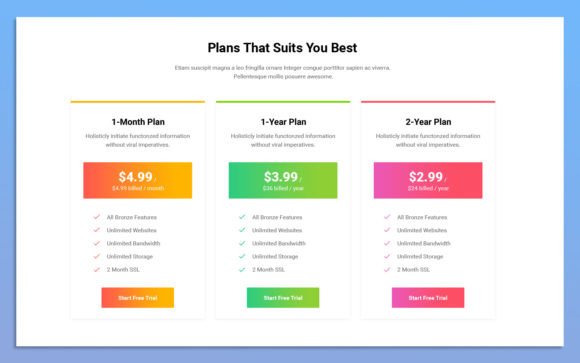
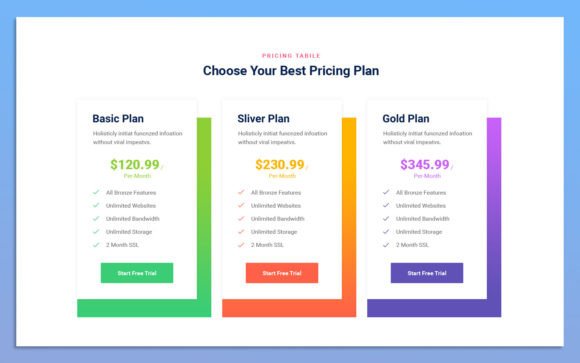
4. Pricing Plan UI Elements refers to a specific collection of user interface templates designed to display subscription tiers or service packages. Unlike generic, monochrome tables, these elements emphasize creativity and color usage to capture attention. The core value proposition lies in its adaptability. Provided in PSD (Photoshop Document) format, the resource allows for granular control over every visual aspect, from typography to layer organization. The design philosophy centers on simplicity and modernity, ensuring that the pricing information remains legible and accessible while maintaining aesthetic appeal.
The inclusion of Google Fonts and RGB color profiles indicates that these elements are optimized for screen-based displays, such as websites, web applications, and mobile app interfaces. For professionals seeking simple services for their digital platforms, this resource offers a starting point that reduces the time required to build pricing structures from scratch.
Key Features and Technical Specifications
When evaluating any design asset, understanding its technical foundation is essential for integration. The 4. Pricing Plan UI Elements package includes several notable features that contribute to its ease of use:
- Fully Organized Layers: The PSD files are structured with logical layer naming and grouping. This organization is crucial for efficient editing, allowing designers to isolate specific components such as buttons, headers, or feature lists without disrupting the overall layout.
- Customizable Color Styles: Users can easily modify the color palette to match existing brand guidelines. The use of standard RGB values ensures consistency across different devices and browsers.
- Modern Typography: The integration of Google Fonts provides a wide range of typographic options that are web-safe and visually contemporary. This eliminates the need for additional font licensing in many cases.
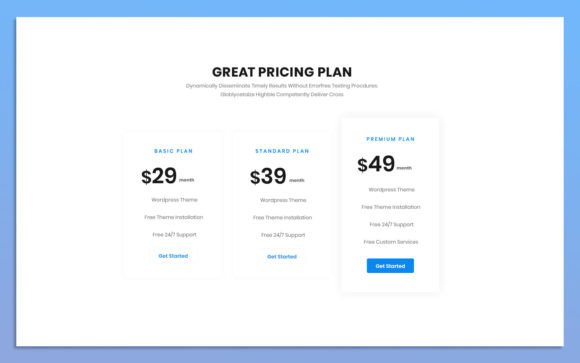
- Clean and Modern Design: The aesthetic avoids clutter, focusing on whitespace and clear hierarchy to improve readability and user experience.
These technical attributes make the resource particularly appealing to designers who prioritize workflow efficiency. The ability to fully edit the source file in Adobe Photoshop means that the final output can be tailored precisely to the project’s needs, rather than being constrained by rigid templates.
Benefits of Using Pre-Designed Pricing UI Elements
Adopting a pre-designed UI kit like 4. Pricing Plan UI Elements offers several strategic advantages for web development projects. Primarily, it accelerates the design phase. Creating a pricing table from zero requires careful consideration of spacing, alignment, contrast, and responsive behavior. By leveraging a pre-built structure, designers can bypass the initial conceptualization stage and focus on customization and integration.
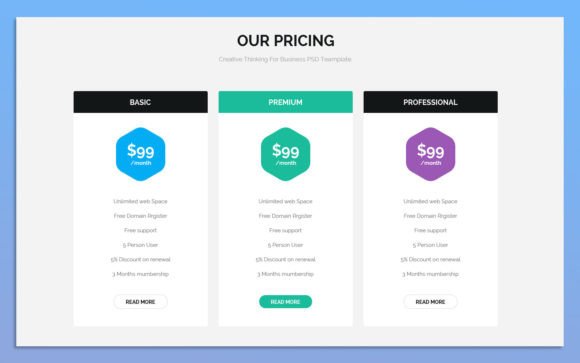
Furthermore, these elements promote visual consistency. A professionally designed template ensures that proportional relationships and typographic scales are balanced. This reduces the risk of common design errors, such as misaligned columns or inconsistent button styles, which can undermine user trust. The colorful and creative nature of these specific elements also helps in differentiating pricing tiers visually, making it easier for users to distinguish between basic, standard, and premium options.
For startups and small businesses with limited design resources, this type of asset provides a cost-effective solution. It delivers a high-quality visual result without the expense of hiring a specialized UI designer for a custom component.
Considerations and Tradeoffs
While the benefits are significant, there are tradeoffs to consider when using template-based UI elements. The primary limitation is the dependency on Adobe Photoshop. Teams that rely exclusively on vector-based tools like Adobe Illustrator or modern interface design platforms like Figma or Sketch may find the PSD format less compatible with their workflow. Converting PSD layers to other formats can sometimes result in loss of editability or require additional processing time.
Another consideration is the potential for generic appearance. Although the 4. Pricing Plan UI Elements are described as creative and colorful, widespread use of popular templates can lead to a sense of familiarity among users who visit multiple sites. To mitigate this, extensive customization is necessary. Designers must invest time in altering colors, fonts, and layout structures to ensure the final product feels unique to their brand.
Additionally, while the visual design is robust, the resource does not include front-end code (HTML/CSS/JavaScript). Developers will need to translate the visual design into functional code manually. This requires a clear handoff process between designers and developers to ensure that the interactive states, such as hover effects and active selections, are implemented correctly.
Ideal Use Cases
This resource is a strong fit for specific scenarios where visual impact and rapid deployment are priorities. It is particularly suitable for:
- SaaS Platforms and Subscription Services: Companies offering tiered subscription models benefit from clear, comparative pricing tables. The colorful differentiation helps highlight the recommended or most popular plan.
- Digital Agencies and Freelancers: Service providers who need to present package deals on their portfolios or landing pages can use these elements to create professional-looking service menus quickly.
- E-commerce Sites with Service Add-ons: Online stores that offer installation, warranty, or support packages can use these UI elements to upsell additional services at checkout.
- Marketing Campaign Landing Pages: For short-term campaigns where speed to market is critical, using a pre-designed UI element allows for faster A/B testing of different pricing strategies.
In these contexts, the ease of customization and the modern aesthetic contribute directly to improved user engagement and conversion rates.
When to Consider Alternatives
Despite its versatility, 4. Pricing Plan UI Elements may not be the optimal choice for every project. Organizations with strict accessibility compliance requirements may need to verify that the color contrasts in the template meet WCAG standards after customization. If a team lacks the expertise to adjust contrast ratios appropriately, a more accessibility-focused framework might be preferable.
Furthermore, projects that require complex dynamic pricing logic, such as real-time currency conversion or usage-based calculators, may outgrow the static nature of a design template. In such cases, a component library built with React, Vue, or Angular might offer better integration with backend data systems. Similarly, if a design team operates entirely within a design system managed in Figma, sourcing a native Figma component library would streamline collaboration more effectively than converting PSD files.
Making the Decision
Choosing whether to incorporate 4. Pricing Plan UI Elements into your project depends on your team’s workflow, technical stack, and design goals. If you prioritize rapid prototyping, have access to Adobe Photoshop, and need a visually striking starting point for your pricing strategy, this resource offers substantial value. Its organized layers and customizable features provide the flexibility needed to align with diverse brand identities.
However, if your workflow is centered around code-first development or vector-based design tools, the friction of converting PSD files may outweigh the benefits. In such cases, exploring HTML/CSS templates or native components for your preferred design software may be more efficient. Ultimately, the decision should balance the time saved in initial design against the effort required for customization and implementation. By carefully assessing these factors, you can determine if this UI element set supports your broader objectives for user experience and conversion optimization.