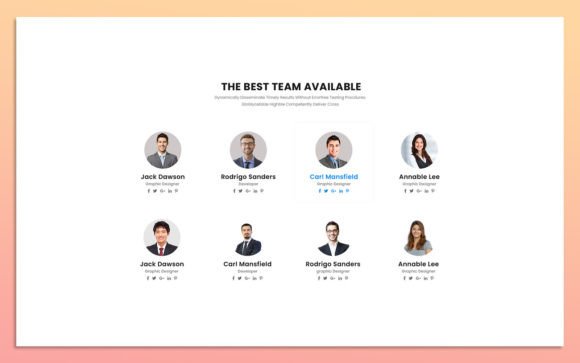
Evaluating the 17.Team Member Widget Design Elements for Modern Web Interfaces
In the landscape of modern web development, the presentation of team members is more than a mere administrative necessity; it is a critical component of brand trust and user engagement. The 17.Team Member Widget Design Elements represent a specialized approach to solving this design challenge within the context of Web-UI kits. For designers, developers, and project managers evaluating tools for their next digital product, understanding the specific utility, flexibility, and limitations of these widgets is essential. This article provides an objective analysis of these design elements, helping you determine if they align with your project’s aesthetic goals and technical requirements.
Understanding the Core Concept
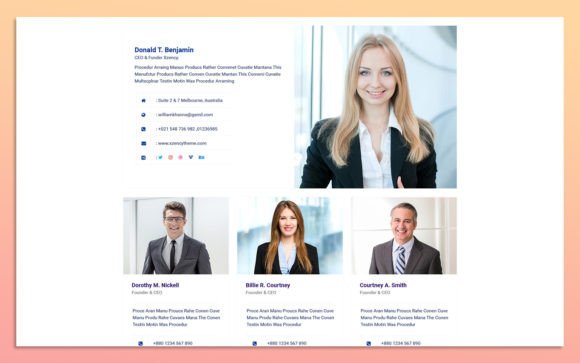
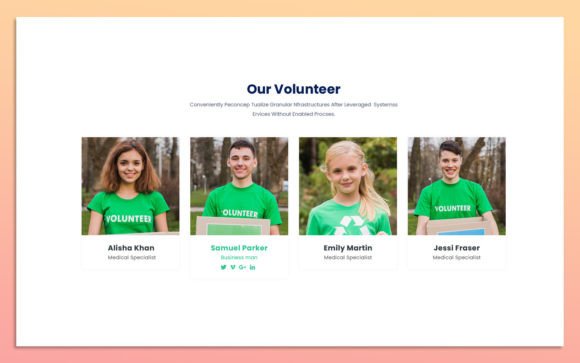
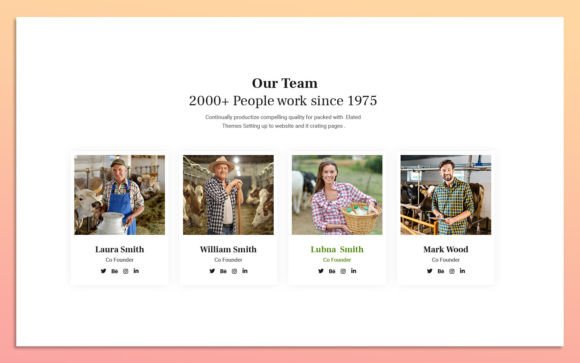
The 17.Team Member Widget Design Elements are pre-designed interface components specifically crafted to display personnel information in a structured, visually appealing manner. Unlike generic templates that may require significant restructuring, these elements are built with modularity in mind. They are part of a broader Web-UI kit, meaning they are designed to integrate seamlessly with other interface components such as navigation bars, footers, and content blocks. The primary value proposition lies in their ease of use and high degree of customizability, allowing users to adapt the visual style without starting from scratch.
At its core, this resource is a Photoshop source file. It leverages fully organized layers and scalable vector elements, ensuring that every aspect of the design—from typography to imagery—can be manipulated. The reliance on Google Fonts further enhances its accessibility, ensuring that text rendering remains consistent across different browsers and operating systems when implemented in code.
Why Designers Choose Pre-Built Team Widgets
When evaluating whether to utilize the 17.Team Member Widget Design Elements, it is important to consider the common pain points in UI design. Creating a team section from zero involves multiple decisions: layout structure, image aspect ratios, typography hierarchy, and color harmony. These decisions consume time and can lead to inconsistency if not managed carefully.
One of the primary reasons professionals gravitate toward this type of asset is efficiency. By providing a "Simple, clean, and modern design" out of the box, the widget eliminates the initial brainstorming phase. Designers can immediately focus on content integration rather than structural experimentation. Furthermore, the promise of being "100% scalable and fully edited on Photoshop" addresses a major concern in responsive web design: adaptability. A scalable design ensures that the widget looks crisp on high-resolution displays and remains legible on smaller mobile screens.
Key Benefits and Functional Advantages
The practical benefits of using the 17.Team Member Widget Design Elements extend beyond mere aesthetics. Here are the key advantages that contribute to their utility in professional workflows:
- Customization Flexibility: The ability to easily change color styles allows the widget to align with existing brand guidelines. Whether your project requires a corporate blue palette or a vibrant startup aesthetic, the underlying structure supports these changes without breaking the layout.
- Organized Workflow: Fully organized layers in the Photoshop source file are crucial for collaboration. When multiple designers work on a project, clear layer naming and grouping reduce errors and speed up the handoff process to developers.
- Typography Consistency: By utilizing Google Fonts, the design ensures that the typographic choices are web-safe and widely supported. This reduces the friction often encountered when trying to implement custom fonts that may not render correctly across all devices.
- Image Management: The widgets are designed to handle various image formats and aspect ratios. This is particularly useful for teams where professional headshots may vary in quality or composition, as the container shapes help standardize the final appearance.
Tradeoffs and Considerations
While the 17.Team Member Widget Design Elements offer significant advantages, they are not a universal solution for every scenario. An objective evaluation requires acknowledging potential tradeoffs.
First, the dependency on Photoshop means that users must have proficiency in Adobe’s ecosystem. For teams that primarily work in Figma, Sketch, or Adobe XD, using a Photoshop-only source file may introduce an extra step in the workflow. Converting layers or redesigning components in the preferred tool can negate some of the time-saving benefits. Therefore, it is vital to assess your team’s current software stack before committing to this format.
Second, while the design is described as "modern," trends in web UI evolve rapidly. A clean design today may appear dated in two years. Users should consider whether the widget’s structure is timeless enough to withstand minor trend shifts, or if it relies heavily on stylistic choices that may require frequent updates. The simplicity of the design helps mitigate this risk, but it remains a factor to consider for long-term projects.
Ideal Use Cases
The 17.Team Member Widget Design Elements are a strong fit for specific types of projects. They are particularly effective for:
- Corporate Websites: Organizations that need to present a large number of employees in a structured, professional manner will benefit from the uniformity and cleanliness of the widget.
- Agency Portfolios: Creative agencies often need to showcase their team’s personality while maintaining a cohesive brand identity. The customizable color styles allow for creative expression without sacrificing professionalism.
- Startup Landing Pages: For early-stage companies, speed to market is critical. Using a pre-built, high-quality widget allows startups to launch a polished "About Us" section quickly, building credibility with potential investors and customers.
In these scenarios, the balance between aesthetic appeal and functional clarity provided by the widget supports the broader goals of the website.
When to Consider Alternatives
There are situations where alternative approaches may be more suitable. If your project requires highly interactive elements, such as hover effects that reveal detailed bios or dynamic filtering by department, a static Photoshop design may not be sufficient. In such cases, you might need a component library built directly in code (such as React or Vue components) or a design tool that supports prototyping interactions more robustly.
Additionally, if your team lacks access to Adobe Photoshop, the learning curve associated with editing the source file may outweigh the benefits. In these instances, looking for UI kits available in Figma or Sketch might provide a smoother integration into your existing workflow.
Making the Decision
To determine if the 17.Team Member Widget Design Elements are right for your project, ask yourself the following questions:
- Does my team have the necessary skills to edit Photoshop files efficiently?
- Is the primary goal to achieve a clean, professional look with minimal design time?
- Do I need the flexibility to change colors and images easily to match brand guidelines?
- Is the project static in nature, or does it require complex interactive behaviors that go beyond visual design?
If the answers to the first three questions are yes, and the fourth is no or neutral, then this widget set is likely a valuable asset. It offers a pragmatic solution for creating professional team sections, balancing ease of use with the depth of customization required for high-quality web interfaces. By leveraging fully organized layers and scalable elements, you can ensure that your final output is both visually striking and technically sound.
Ultimately, the value of the 17.Team Member Widget Design Elements lies in their ability to streamline the design process without compromising on quality. For those seeking a reliable, editable, and modern solution for displaying team information, these elements provide a solid foundation upon which to build a trustworthy and engaging web presence.